
A ceremony for wearing gowns and academic performance was held on the 20th anniversary of MAKÜ.
Yapılış Tarihi | 06 April 2026, Monday

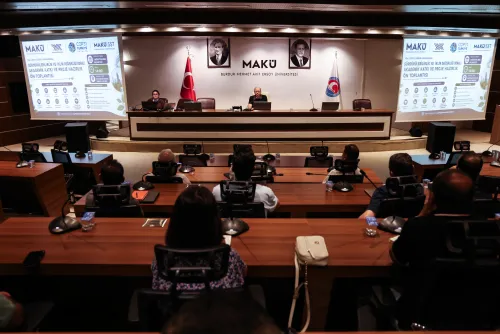
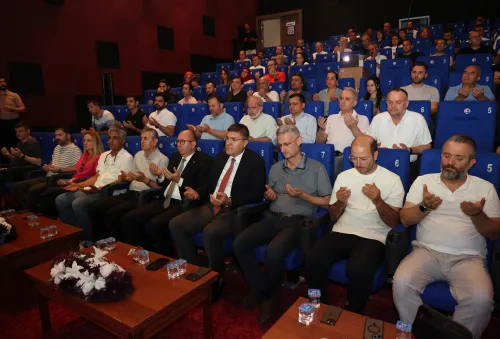
The Robe Wearing and Academic Performance Award Ceremony for faculty members who have achieved academic progress and received titles was held at the MAKÜ Conference and Exhibition Hall.
The ceremony began with a moment of silence and the singing of the National Anthem. Following this, a promotional film prepared by the Corporate Communication Application and Research Center Directorate was watched. Then, a music recital prepared by the MAKÜ Turkish Music State Conservatory was performed.
“We have achieved great development in 20 years”
Rector Prof. Dr. Hüseyin Dalgar emphasized in his speech at the ceremony that the event was not just a promotion program, but also an indicator of long-standing effort and consistent growth. Rector Dalgar stated that universities must adapt to rapid changes and highlighted that the most important strength in this process is qualified human resources. He expressed that a significant portion of the academic staff is promoted each year at the university, indicating that this is an important indicator of institutional development.
Touching on the size the university has reached today, Rector Dalgar stated that with over 1200 academic and approximately 900 administrative staff and more than 35,000 students, they have become a large academic family. He noted that the university, which started with a limited number of professors in its founding years, has now reached over 200 professors, and the academic staff has significantly strengthened both quantitatively and qualitatively.
Addressing developments in education and quality, Rector Dalgar stated that the university is among the few in Turkey to receive full accreditation in the institutional accreditation process. He noted that the number of accredited programs has rapidly increased in recent years and that they aim to raise this number even further.
Emphasizing the importance of applied education, Rector Prof. Dr. Hüseyin Dalgar stated that thanks to the education model where students play an active role in the field, graduates are more prepared for business life and significant success has been achieved in employment rates. He also noted that micro-competency programs have been expanded for students to develop themselves in different areas.
Touching on efforts to increase scientific research capacity, Rector Dalgar stated that project budgets have been significantly increased and new technologies have been introduced to support the work of academics. He said that academic production will be further encouraged with new support mechanisms.
Regarding university-industry collaboration, Rector Prof. Dr. Dalgar stated that the technopark is operating at full capacity, and projects developed especially in the fields of agriculture and livestock have yielded tangible results, with some products being commercialized.
Expressing that significant steps have been taken in internationalization, Rector Dalgar noted that there have been significant increases in the number of international students and academic collaborations. He stated that they have achieved a rise in scientific publication performance and emphasized that this success is the result of the dedicated work of the academic staff.
Regarding digital transformation, Rector Dalgar stated that processes at the university have largely been moved to digital platforms, creating a faster and more transparent management structure. He noted that they stand out with sports infrastructure and community contribution projects, especially mentioning that academic knowledge has been transferred to the field with the “Village University” project.
At the end of his speech, Rector Prof. Dr. Hüseyin Dalgar emphasized the importance of family support in the success of academics, congratulating all faculty members who received promotions and wishing them continued success.
“The university is now a regional power”
Former Rector and Burdur Member of Parliament Prof. Dr. Adem Korkmaz, who spoke at the ceremony, stated that the university has undergone a significant transformation in 20 years. Korkmaz expressed that MAKÜ has become an institution that produces value not only for the city it is located in but also for the country as a whole, and stated that the scientific and social contributions of academics have played a major role in this success.
“Scientific production is an investment in the future”
Burdur Governor Tülay Baydar Bilgihan also emphasized in her speech the sacrifices of academics, highlighting that scientific studies shape the future of society in the long term. Bilgihan stated that the contribution of the university to the city is significant and emphasized the importance of continuing this collaboration.
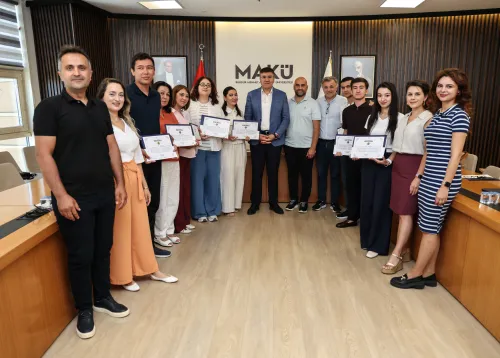
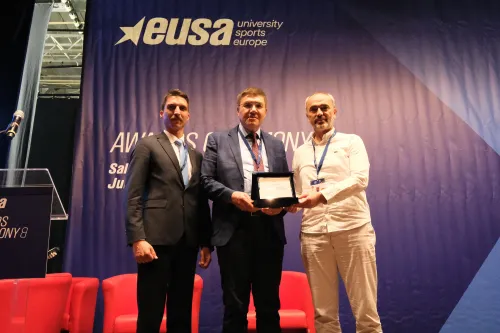
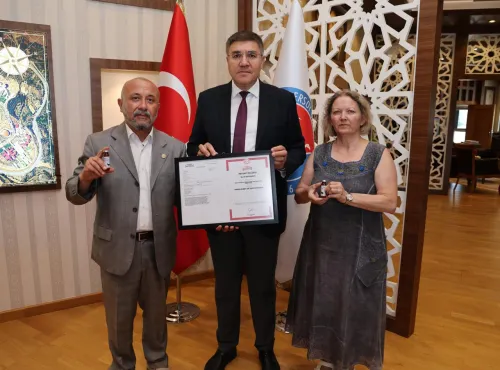
After the speeches, the ceremony continued with the Robe Wearing ceremony. The robes were donned on the academics by Rector Prof. Dr. Hüseyin Dalgar, while the Academic Performance Awards were presented by Governor Tülay Baydar Bilgihan, Member of Parliament Prof. Dr. Adem Korkmaz, Rector Prof. Dr. Hüseyin Dalgar, Deputy Mayor Hülya Eraslan, Vice Rectors Prof. Dr. Ömer Tekşen, Prof. Dr. Hakan Öner, and Prof. Dr. Oğuz Gürsoy.
At the ceremony, organized to encourage academic achievements within the university and honor outstanding scientific contributions, academic performance certificates were awarded to academics who published the most in international journals in the fields of educational sciences, natural sciences and mathematics, engineering, health sciences, social humanities and administrative sciences, sports sciences, and agriculture, forestry, and aquaculture, to academics who brought international project funds to our country with international projects, to academics who showed project success at the national level, to academics who obtained patents as a result of academic discoveries, to young researchers, and to academics who have risen in academic titles and received new titles in this context.